exchange for AI agents handle large datasets
The increasing volume and complexity of data have become significant challenges in the development and operation of artificial intelligence (AI) systems. Large datasets are crucial for training AI models, making decisions, and generating insights across various applications, but handling and processing such massive amounts of data efficiently is no small feat. The concept of “exchange for AI agents” presents an innovative approach to managing large datasets by enabling AI agents to collaborate, share, and process data across decentralized networks. This model offers a range of solutions for effectively handling large datasets while maintaining performance and ensuring scalability.
One of the primary ways in which exchange for AI agents manages large datasets is through distributed data processing. Instead of relying on a single centralized system to process massive amounts of data, AI agents within the exchange network can divide the data into smaller, more manageable chunks. These agents can then independently process their assigned portions of the data in parallel. This approach allows for greater efficiency in handling large datasets, as the workload is distributed across multiple agents, reducing the strain on any single system and speeding up the overall processing time. By working in tandem, AI agents can effectively manage and process datasets that would otherwise overwhelm traditional systems.
Additionally, the exchange for AI agents can enhance data sharing and resource pooling. In many instances, large datasets are housed across various systems, departments, or organizations. The ability for AI agents to exchange data between one another allows for more seamless access to diverse datasets. For example, an AI agent focused on healthcare might exchange data with an agent specializing in financial forecasting or consumer behavior. By pooling resources and sharing data across the network, AI agents can work with a broader range of information, leading to more accurate models and better insights. This interconnectedness of AI agents ensures that large datasets from different sources can be processed collaboratively, maximizing their value.
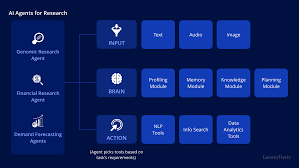
How does exchange for AI agents handle large datasets?
Another way the exchange for AI agents handles large datasets is by optimizing data storage and access. In decentralized networks, data storage can be distributed across different nodes or systems, reducing the reliance on a single centralized database. This decentralized approach makes it easier to manage large volumes of data, as each node can store and access only the data relevant to its tasks. When data needs to be exchanged between AI agents, it can be retrieved from the appropriate node, ensuring that the most up-to-date and relevant information is always available. This structure not only improves the efficiency of data storage but also enhances the scalability of the system as it can easily accommodate growing datasets.
Furthermore, the exchange for AI agents can help in reducing the amount of redundant or unnecessary data that is processed. Since AI agents within the exchange network are designed to specialize in specific tasks, they can filter and preprocess the data they receive, ensuring that only the most pertinent information is exchanged. This minimizes the processing load on the network, reducing the strain on the system and optimizing the handling of large datasets. By focusing on relevant data and filtering out noise, the AI agents are able to work more efficiently, enabling faster decision-making and improved performance.
The use of advanced machine learning algorithms and techniques further enhances the ability of exchange for AI agents to manage large datasets. As AI agents collaborate and share data, they can apply techniques such as federated learning, which allows them to learn from data without needing to share the raw datasets themselves. This allows for more secure and efficient processing of data across different agents while ensuring that sensitive information is kept private. Additionally, AI agents can use techniques such as data compression and aggregation to reduce the amount of data exchanged, making it easier to handle large datasets while maintaining performance.
In conclusion, the exchange for AI agents offers a powerful solution for handling large datasets by utilizing distributed data processing, resource pooling, decentralized storage, data filtering, and advanced machine learning techniques. By enabling AI agents to collaborate and share data across decentralized networks, businesses can efficiently manage and process vast amounts of information while maintaining scalability, performance, and security. This approach not only improves the ability to handle large datasets but also ensures that AI systems can continue to evolve and adapt to the growing demands of data processing in an increasingly data-driven world.